It's #DiabetesAwarenessWeek and it felt like the right moment to share something a little closer to home.
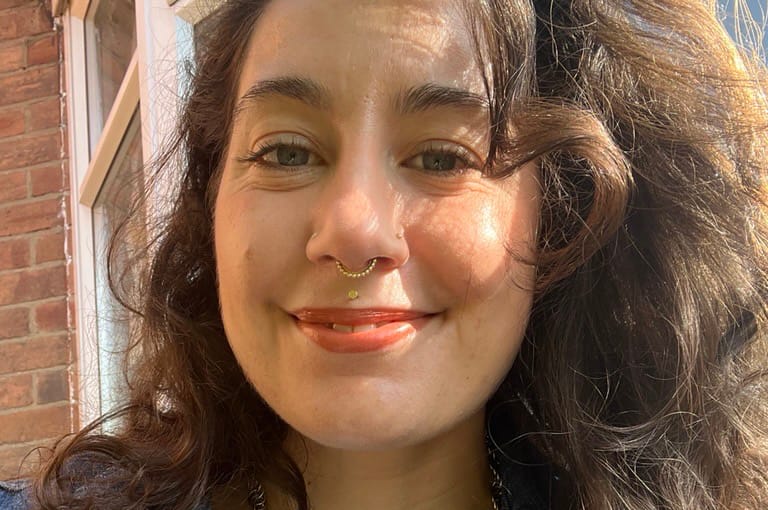
When Ellie, our Studio Designer, was diagnosed with diabetes later in life, it came with a learning curve she hadn't anticipated. She's written honestly about that experience and about how rapidly improving technology has changed what day-to-day management actually looks like.
It's a personal piece, and a timely one. We're proud to have people at IGNIFI like Ellie who are willing to share their story.
21 is anecdotally considered to be pretty late for type 1, and even though my symptoms were textbook — extreme thirst, constantly needing the bathroom, tiredness and lethargy — in the emergency GP appointment I was told that since I was at university, I’d clearly just been partying too hard. I’d just come back from a holiday abroad but had spent half of it ill, in bed, and hadn’t had a single alcoholic drink all week. “Alright then,” said the doctor, “you’ve had the heating on too high and that’s why you’re so thirsty.”
I was lucky I had my mum with me at the appointment, to advocate for me and insist on blood tests. I was pretty out of it, sluggish and sleepy and convinced I had the flu. I went home and lay down on the sofa and slept. The blood tests came back later that day showing absurdly high levels of glucose. I went straight to A&E and was admitted as an inpatient. My life changed that day.
Diabetes is still being researched, with new discoveries made all the time and technology advancing constantly, and it’s becoming clear that previous assumptions about who is diagnosed and when are no longer necessarily true.
In type 1, your body no longer generates insulin, a hormone produced by the pancreas which allows cells to convert glucose into energy. Without insulin, your body has no way of accessing that energy source, and so it turns to the only other option available: fat. People with undiagnosed type 1 diabetes may have seen dramatic and unexplained weight loss as their bodies literally ate themselves to stay alive. Additionally, once that sugar is in the blood with nowhere to go, it begins to build up, causing other problems as the large molecules start to damage your blood vessels.
There is no cure for type 1 diabetes. There is only, currently, management. In order to live, synthetic insulin is administered subcutaneously, and getting the dosage right is a science, but also very much an art. Everyone responds to insulin with different sensitivity, and things like hormonal changes, illness, and heat can all affect absorption. The amount you take is based on the amount of carbohydrate you eat. It requires precise timing as well as accurate calculation, and so it’s no lie to say that day-to-day diabetes management takes constant attention.
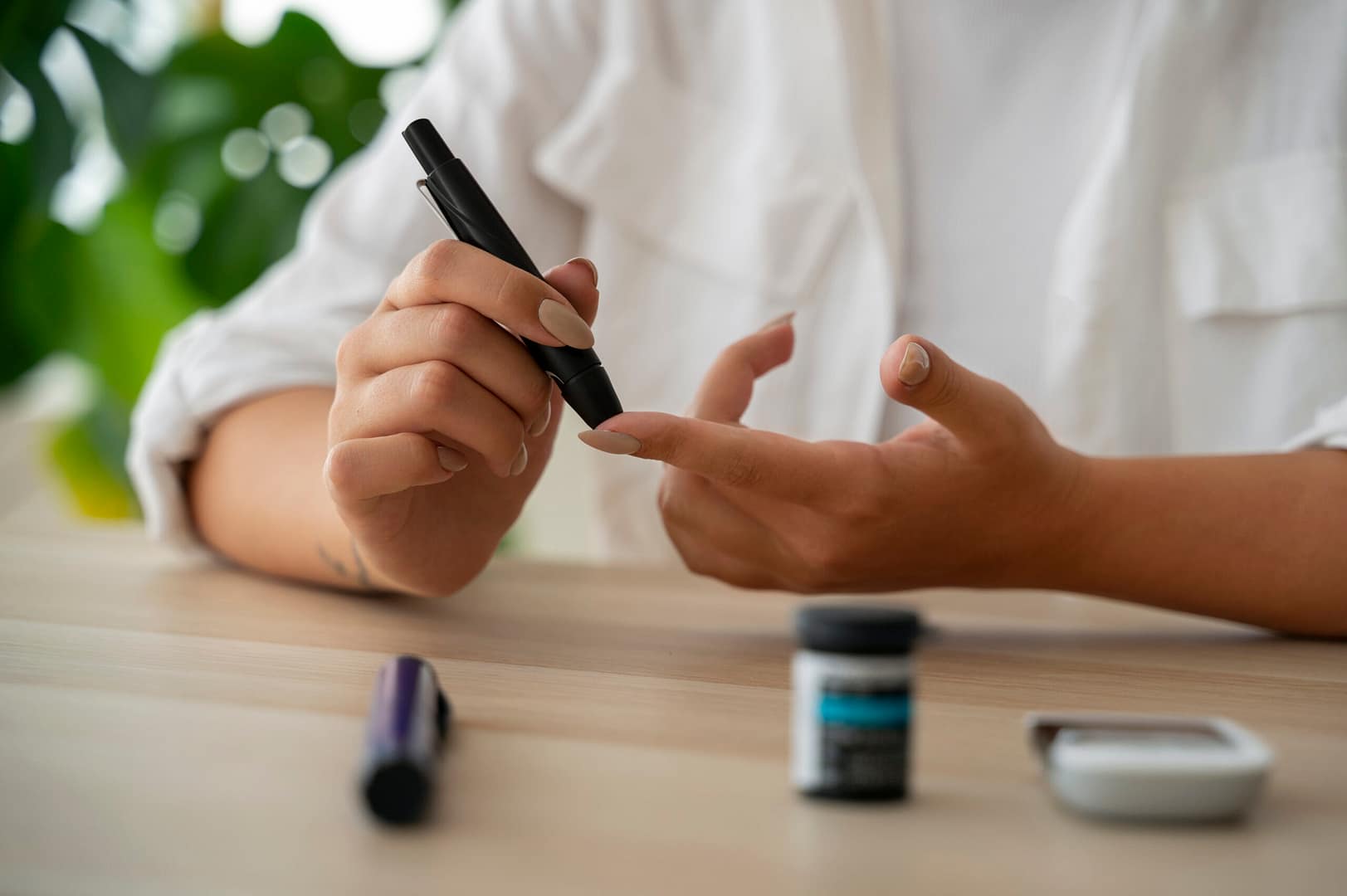
After I was diagnosed, I was given a finger-prick blood tester and pre-filled insulin syringes, and for years that was how I managed. Testing my blood glucose far less than I should, dosing fairly randomly with only a vague understanding of carbs and occasionally suffering dramatic “hypos”. A hypo is when your blood glucose drops too low, leading to dizziness, sweating, shaking, and even sometimes loss of consciousness and seizure in severe cases.
When I say that diabetes ruled my life… you can maybe start to see what I mean. It impacts every single moment, every meal, every drink, every time you exercise. It never goes away, and it’s hard not to feel overwhelmed by that. In fact, someone with type 1 diabetes is twice as likely to have depression than the general population, and up to 40% of people with diabetes say they’ve struggled with their mental health since diagnosis.1 It was a good few years before my life changed again.
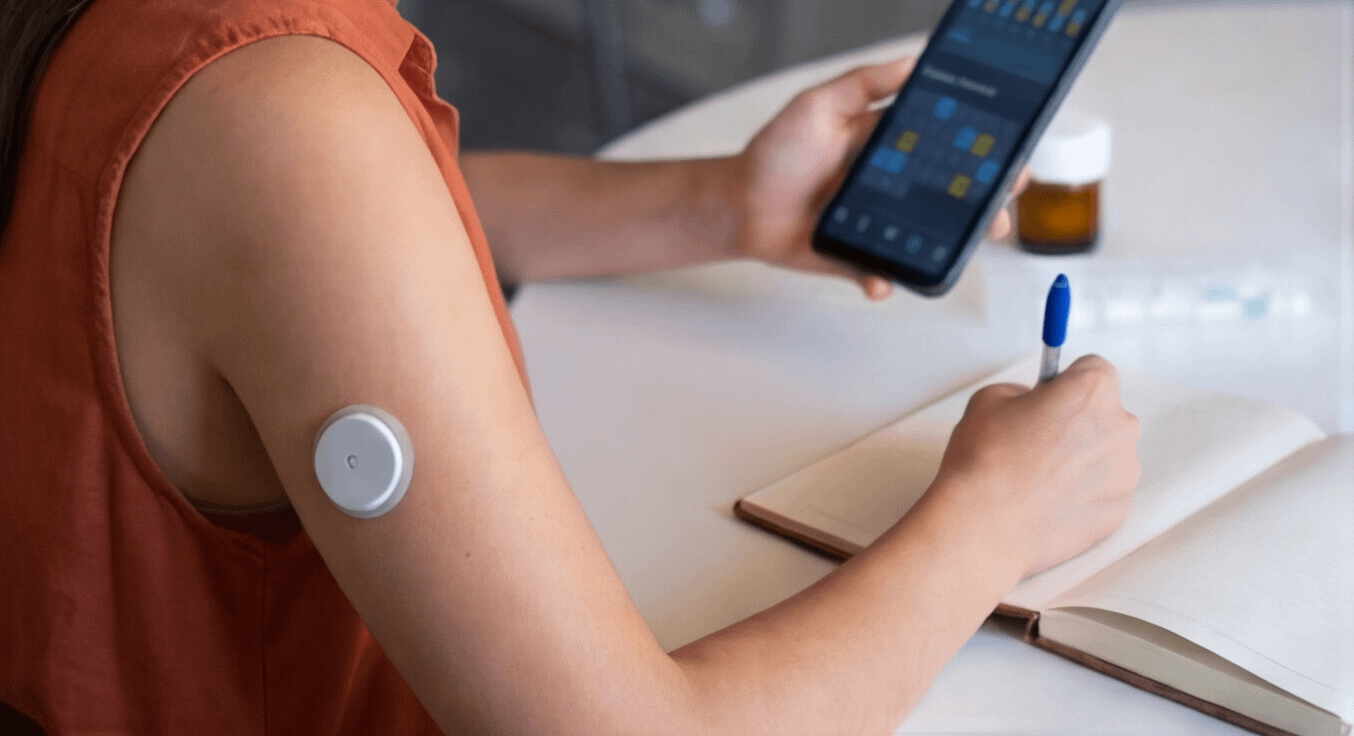
I saw something on social media I think, at first. There was some kind of diabetes technology being developed, a patch that sat on your skin and constantly monitored your blood glucose for you. What a CONCEPT! Imagine not having to stab your fingers multiple times a day, imagine just being able to scan this patch with your phone!
Knowing your blood glucose level is important for multiple reasons; it helps you accurately dose insulin when you eat but also means you can track trends over time. High or low blood glucose levels over an extended period can lead to other complications like diabetic retinopathy, and so keeping a good average is key to longer term health.
I was lucky enough to get access to Abbott’s “flash glucose monitor”, the Freestyle Libre, privately and then eventually on the NHS. The patch is applied almost like a library stamp. A push-down device ka-chunks it onto your arm, pushing a tiny filament through the dermis to sit in the subcutaneous fluid for 14 days. The sensor takes and stores readings until scanned and they’re uploaded to the cloud. Then — wonder of wonders — you see a number on your phone, you see trend arrows, you see a graph with your levels throughout the day. No blood in sight!
Everything changed practically overnight. My condition was suddenly so much more visible, and so it was easier to feel informed and make decisions about it. My Hba1c — a measurement of average blood glucose levels over three months — told the same story. Increased visibility equalled an immediate improvement in control, in average blood glucose, in long-term health outcomes. It was truly lifechanging.
I knew about pumps, vaguely. Some people, I’d heard, chose to have a machine connected to them at all times by a tube, delivering insulin constantly. It would even link to your blood glucose sensor and adjust your dosage for you (something which impatient diabetics created for themselves, jumping ahead of FDA approval and leading to a push for a commercial product).1
This kind of automation sounded incredible, but I didn’t like the idea of a tube. Where would the machine go? What if I wanted to wear a dress? What if people judged me for having a thing attached to me?
I took a DAFNE course (an intensive learning experience for T1Ds dealing with carb-counting and dose adjustment) and reached the other end of it with my mind changed. I could immediately see how much of the mental load a closed-loop pump and sensor system would remove. I could eat more flexibly, I could be spontaneous, I could go to sleep without a low blood glucose alert waking me up at 3am because the pump and sensor would just handle it for me.
It took 6 months from that point to be approved for the pump, for supplies to be ordered and to have a training session scheduled, but then… from one day to another my life changed entirely yet again.
I’ve seen rapid and sweeping changes of diabetes management in the 17 years since my diagnosis. My own treatment has altered considerably since day one, and I’m so overwhelmingly grateful to be where I am now, to have access to the pump through the NHS, and to a different kind of continuous glucose monitor (CGM) which forms that closed loop system. Diabetes is something I live with, but I’m able to live with it due to that technology, those advances.
Attitudes to diabetes are advancing too. 10 years ago, I had to prove that it was worth the NHS funding my flash glucose monitor by demonstrating how much it could improve my control, making me ineligible for a pump due to that same control — they were reserved for patients where it would make the most difference. Today, the NHS is rolling out pump access to more than 150,000 people in England and Wales,2 and as a result has seen improved health outcomes as well as a narrowing of inequality in diabetes care.3
It’s not hyperbolic to say that this technology is lifechanging. This is just my story, but there are undoubtedly thousands of similar experiences up and down the UK, people whose lives have been turned around and lifted from under the relentless weight of this condition.
So, here’s to challenging assumptions, to development and progress. To another 17 years… at which point I’m sure my life will have changed again!
Artificial Raspberry Pi Pancreas. https://www.raspberrypi.com/news/artificial-raspberry-pi-pancreas/. Accessed 8 June, 2026.
NHS to offer 150,000 people with type 1 diabetes an artificial pancreas. https://www.theguardian.com/society/2023/nov/07/nhs-to-offer-150000-people-with-type-1-diabetes-an-artificial-pancreas. Accessed 8 June, 2026.
NHS rollout of artificial pancreas narrows inequality in diabetes care. https://www.theguardian.com/society/2026/may/19/nhs-rollout-artificial-pancreas-narrows-inequality-diabetes-care. Accessed 8 June, 2026.


© IGNIFI 2026
IGNIFI Limited Registered office: 40 George Street, London, W1U 7DW
Company number: 2128733
Registered VAT number: 357 1506 56